Water Damage Drywall Repair: How to Decide What Comes Next
Learn how to assess water-damaged drywall, spot safety concerns, and decide when repair, replacement, or professional help is appropriate.
Learn how to assess water-damaged drywall, spot safety concerns, and decide when repair, replacement, or professional help is appropriate.
Water damage drywall repair starts with a precise assessment of what the wall absorbed, and what may be developing behind it. A small clean-water stain caught early may require only thorough drying and a seamless drywall patch. Soft, swollen, or crumbling drywall, however, often calls for removal to protect the surrounding wall and prevent lingering moisture damage. Here’s how to secure the area, assess the damage, and determine the right next step.
Water-damaged drywall requires more than covering a stain. First stop the water source, protect electrical hazards, document damage, and dry the area thoroughly. Firm, fully dried drywall may be repaired or patched, while soft, swollen, sagging, contaminated, or musty material usually needs removal and replacement. Inspect hidden cavities, insulation, and framing for moisture or mould, then finish with proper taping, priming, texture matching, and paint.
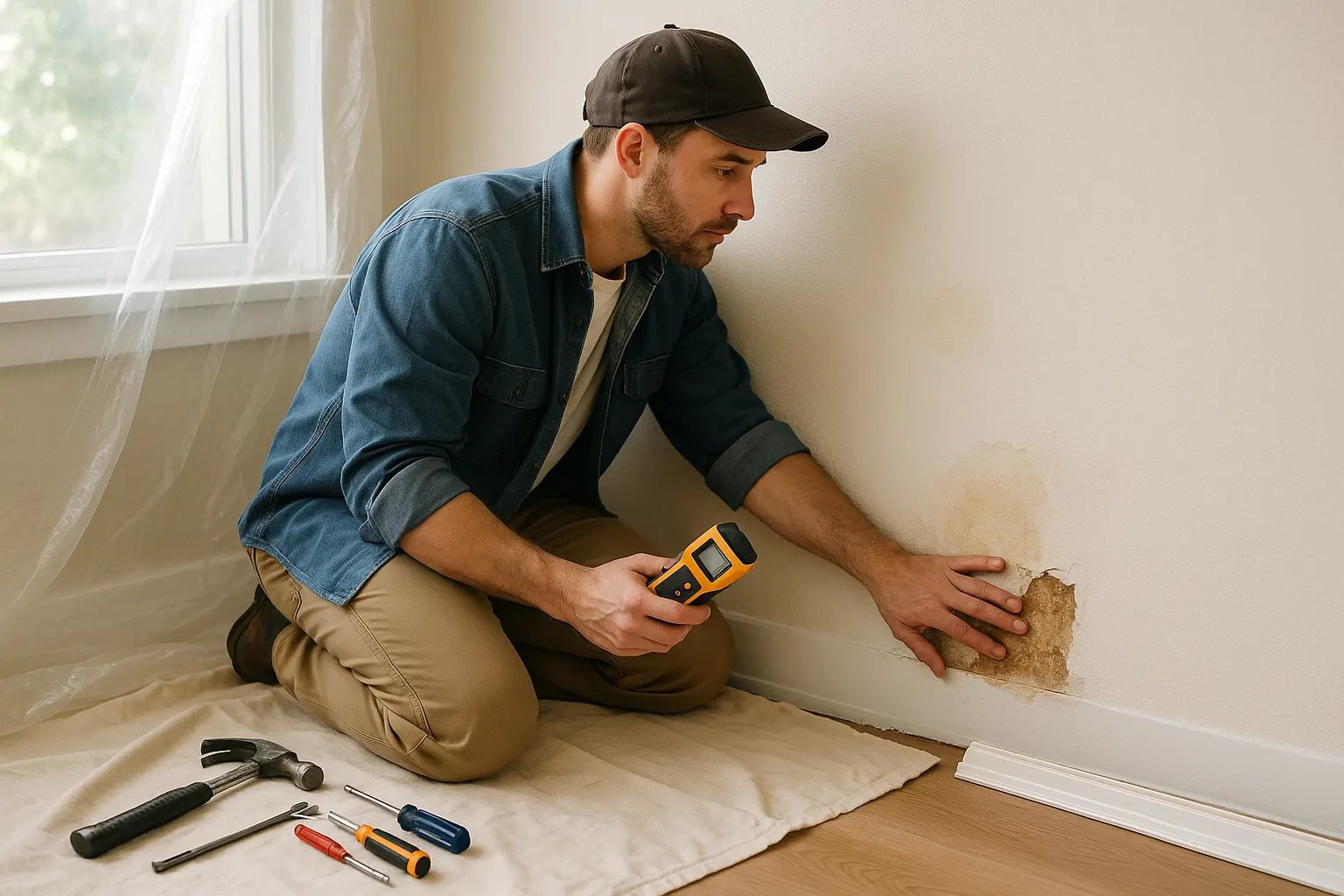
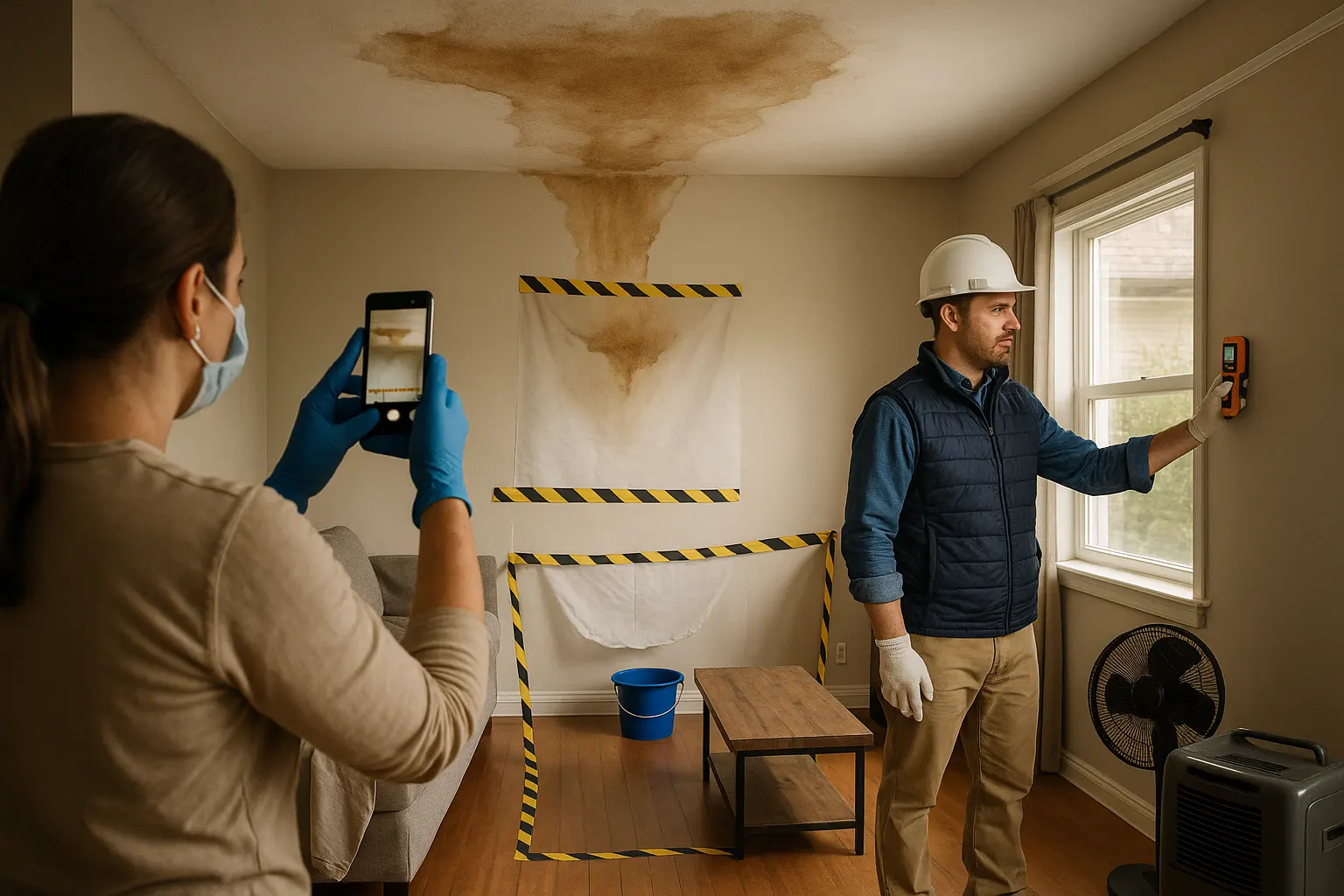
Effective water damage drywall repair begins before any damaged material is removed. First, stop the source of water if it is safe to do so. This may mean shutting off a fixture, placing a container beneath an active leak, or calling a plumber. If water is near outlets, switches, electrical panels, or light fixtures in a drywall ceiling, turn off power to the affected area. Avoid touching wet surfaces. Move furniture, rugs, and valuables away from the wall, then photograph the visible damage for your records or insurance claim.
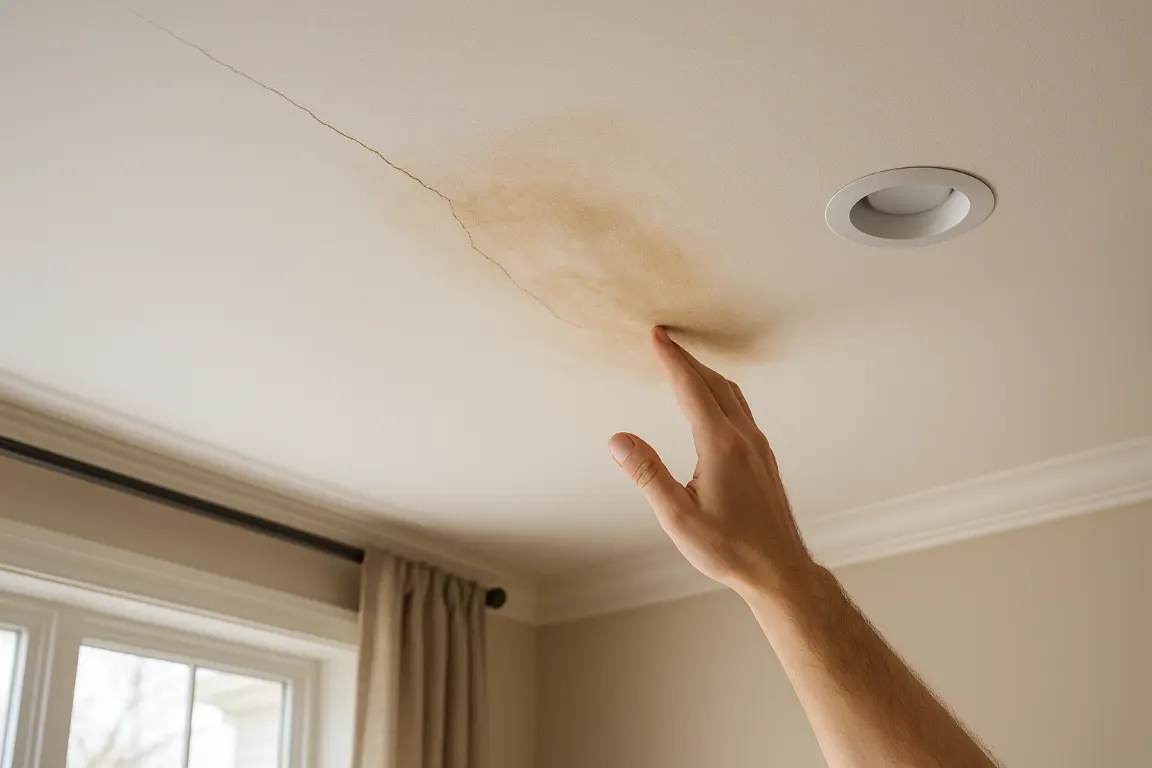
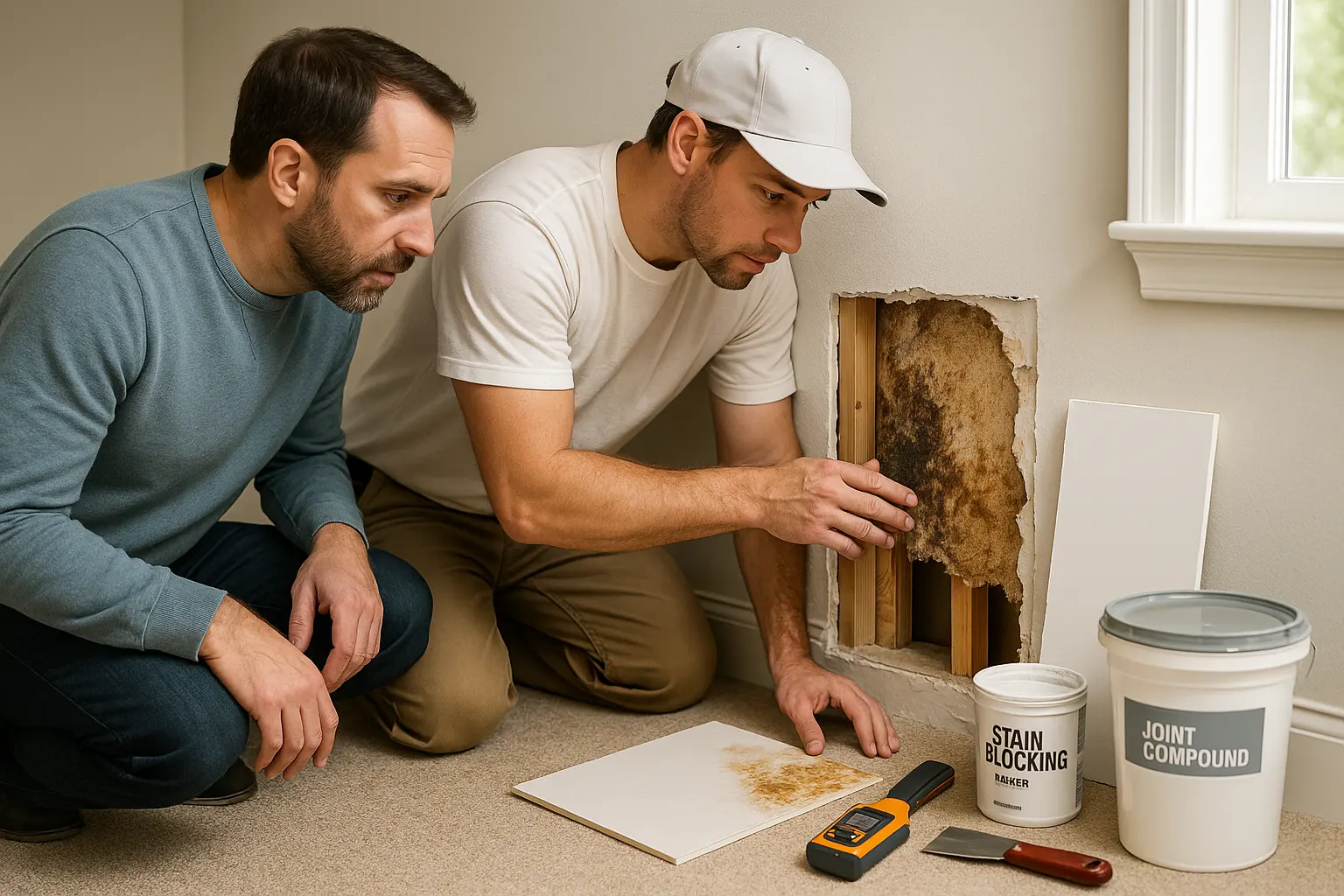
Do not assume a stain reveals the full extent of the problem. Water can travel along framing, collect behind a wall, and saturate insulation well beyond the visible mark. A ceiling that sags or feels soft after a roof, plumbing, or upstairs-bathroom leak should be kept clear. Bulging drywall, peeling paint, crumbling joint compound, musty odours, and discoloured baseboards may all indicate that materials remain wet. If water damaged drywall is swollen or unstable, do not puncture it casually. A controlled opening may assist with drainage, but an unsupported drywall ceiling can release more material than expected.
The next priority is thorough drying. Increase ventilation when conditions allow, use fans and dehumidification, and remove standing water promptly. Surface dryness alone does not confirm that the wall cavity is dry. Moisture trapped in insulation, wood framing, or multiple layers of board can lead to mould growth and more extensive repair later. Clean water from a brief, contained leak may allow for targeted drying and repair. Water from sewage, flooding, a failed drain line, or another contaminated source requires a more cautious response, including removal of affected porous materials and appropriate cleaning procedures.
MrWalls Drywall & Painting evaluates the extent of water damage before recommending how to repair or replace damage drywall. Our professionals assess the source of the leak, the condition of the board and insulation, signs of compromised framing, and whether the area can be dried reliably. From there, a professional contractor can explain whether a precise patch, larger wall replacement, ceiling repair, retaping, texture matching, and repainting are needed to restore your home properly. Asking for a detailed quote clarifies the proposed services, materials, preparation, and finish work, ensuring the repair addresses both the visible damage and any moisture that may have affected the area behind it.
Water-damaged drywall is not automatically a tear-out-and-replace emergency. The right decision depends on the extent of the water damage, not merely the appearance of a stain. Drywall absorbs water quickly, yet a small leak or brief overflow may leave limited damage that can be repaired. When the source is stopped promptly and the damaged drywall dries completely without swelling, crumbling, sagging, or odor, drywall repair may be sufficient. MrWalls Drywall & Painting looks beyond visible damage drywall to assess the wall or ceiling for soft seams, loose tape, bowed surfaces, stained insulation, and trapped moisture. A drywall ceiling should also be inspected above the damaged portion, as water can travel farther than expected. Drying is effective only when the gypsum core remains sound. If the board feels spongy, has lost rigidity, sags, or shows blistered paint and separated joint compound, repairing drywall at the surface may conceal a deeper issue. In these cases, a professional should remove damaged material and replace the affected section with new drywall. Timing matters as well. Clean water caught and dried quickly is very different from a long-running leak, contaminated water, or moisture that has soaked insulation and wall cavities. Persistent dampness can support mold growth, including black mold, especially behind baseboards, inside exterior walls, and above a ceiling. A dark mark does not always indicate mold, but musty odors, spreading discoloration, and recurring stains warrant attention before repairs begin. Proper water damage restoration means correcting the source, drying the structure, and addressing compromised materials, not simply applying paint over a watermark. For minor, isolated water damaged areas, professionals can remove loose material, stabilize the surface, retape seams, apply joint compound, sand, prime, and match the finish. A small drywall patch can be appropriate when the surrounding board is dry and solid. For broader damage, replacement is often the wiser repair, restoring the wall while helping prevent repeat problems at home. Professional restoration services are especially valuable after roof leaks, appliance failures, pipe breaks, and ceiling leaks. A qualified contractor can assess the damage, explain the restoration options, and provide a clear quote. While diy fixes may seem appealing, water damage drywall repair should focus on what can safely be saved, what needs to come out, and how to repair water damage for a seamless, healthy result.
| Condition to assess | Repair may be suitable when | Replacement is often wiser when |
|---|---|---|
| Moisture source | A small clean-water leak or brief overflow was stopped quickly. | The leak was long-running, the water was contaminated, or moisture traveled beyond the visible area. |
| Extent of damage | The affected area is minor and isolated. | Damage is broad, repeated, or involves ceiling leaks, roof leaks, pipe breaks, or appliance failures. |
| Drywall board condition | The gypsum core remains sound after full drying, with no swelling, crumbling, or loss of rigidity. | The board feels spongy, sags, bows, swells, crumbles, or has lost rigidity. |
| Surface and seam condition | Loose material can be stabilized, seams can be retaped, and the finish can be restored. | Paint is blistered, joint compound has separated, tape is loose, or seams feel soft. |
| Hidden moisture indicators | The wall or ceiling is fully dry, with no trapped moisture, musty odor, recurring stains, or spreading discoloration. | Moisture remains behind face paper, in wall cavities, above ceilings, or behind baseboards, or odors and stains persist. |
| Insulation and nearby materials | Insulation and surrounding materials are dry and unaffected. | Insulation is stained or soaked, or compromised materials could continue holding moisture. |
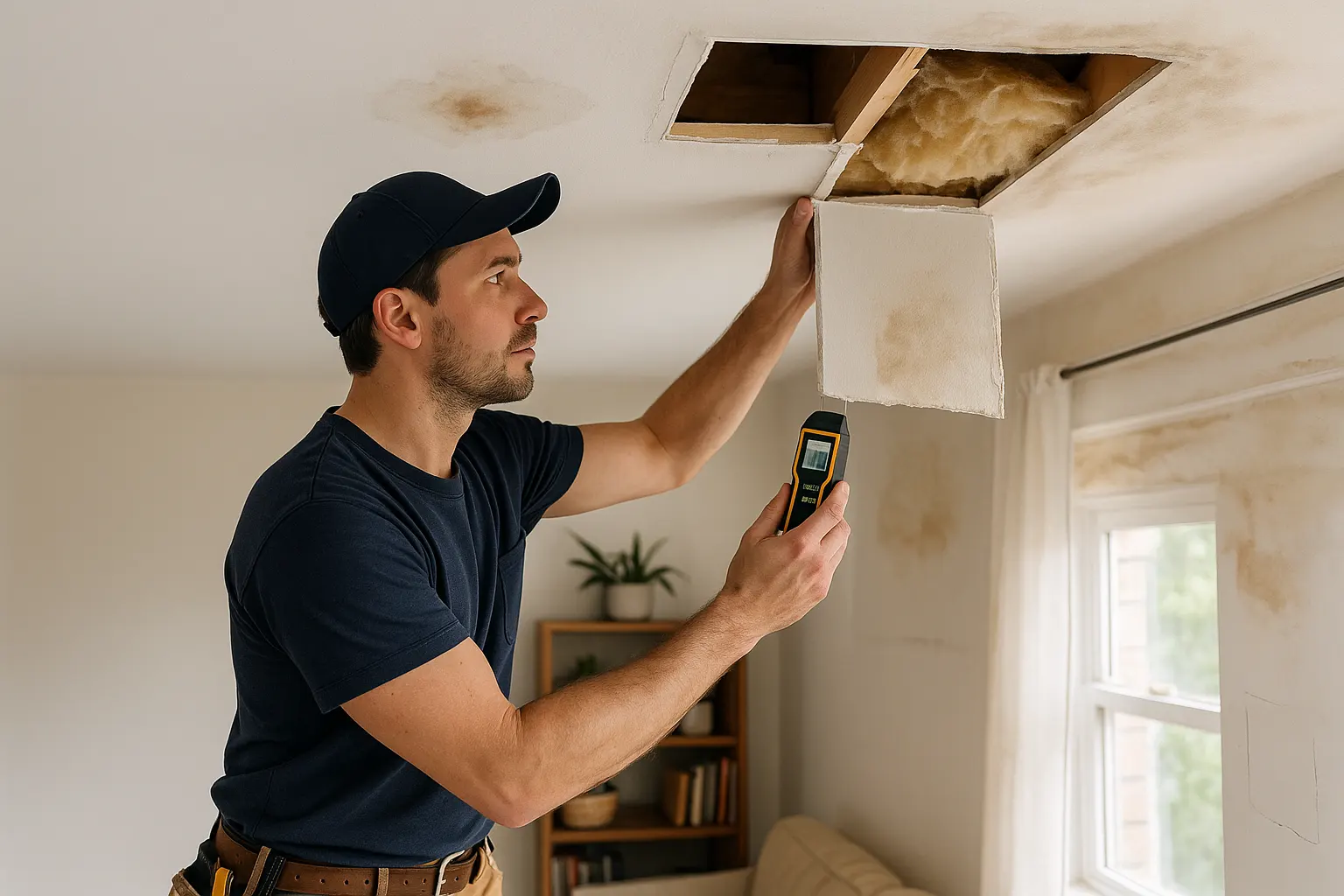
Once the moisture source is corrected and the area is fully dry, remove damaged drywall back to clean, solid material. For smaller repairs, a precisely fitted drywall patch can restore the wall without replacing an entire sheet. Exact cutting, secure backing, careful taping, refined finishing, and a seamless paint match help a diy drywall repair read as part of the original wall, not an afterthought.
How do I know whether water-damaged drywall can be repaired? Start with a careful inspection. Drywall that remains firm, flat, and limited to a minor cosmetic stain may be repairable after the leak is corrected and the wall is completely dry. Soft spots, swelling, crumbling gypsum, sagging seams, or a musty odor usually indicate that the damaged material should be removed. In these situations, water damage drywall repair involves more than concealing a mark. The area may need to be opened enough to verify that the framing and insulation are dry.
Can I paint over a water stain on drywall? Paint alone is not a repair. First, identify and correct the source, whether it is a plumbing leak, roof issue, window intrusion, or condensation problem. Allow the surface to dry fully, then inspect for softness or discoloration that continues to spread. If the drywall is sound, clean the area and apply a stain-blocking primer before repainting. If it is compromised, replace the damaged section before applying primer and paint.
When should I worry about mold growth? Mold growth becomes more likely when materials remain wet for more than a day or two, particularly in enclosed wall cavities, bathrooms, basements, and areas around plumbing. Visible spotting, a persistent odor, or damp insulation warrants a more thorough assessment. Small, isolated areas may be addressed during a controlled drywall repair, but extensive contamination or an ongoing moisture issue requires professional remediation before the wall is closed again.
How large can a drywall patch be? A drywall patch may be as small as a square around a dent or plumbing opening, or as large as the area affected by water damage. The objective is to cut back to stable drywall with clean, manageable edges. For larger openings, install solid backing or fasten the new piece directly to framing. Then tape the seams, apply joint compound in thin coats, sand to a smooth finish, prime, and repaint. Matching an existing wall texture often requires more finesse than the patch itself.
Can I handle water damage drywall repair myself? A homeowner can often manage a small, dry, clearly contained repair with basic tools and patience. Call MrWalls Drywall & Painting when the cause is uncertain, the ceiling is sagging, moisture may remain behind the wall, mold is suspected, or the finish must blend seamlessly with surrounding surfaces. A proper repair protects the wall’s appearance and helps prevent the same problem from returning.
Drying time depends on the amount of water, ventilation, humidity, insulation, and whether moisture entered the wall cavity. Fans and dehumidifiers can help, but the drywall, framing, and insulation should be confirmed dry before patching, taping, or painting.
Wet insulation often needs removal, especially after contaminated water exposure or a prolonged leak. It can hold moisture against framing and drywall, making thorough drying difficult and increasing the chance of odours or mould growth.
Keep clear of a ceiling that is sagging, bulging, soft, cracked, actively dripping, or pulling away at seams. Turn off power to affected electrical areas when safe, control the water source, and arrange a professional assessment before removing material.
Yes. After installing and finishing the patch, a drywall professional can recreate many common wall and ceiling textures. Texture matching, feathered joint compound, primer, and careful paint blending help the repaired area disappear into the surrounding finish.
Coverage depends on the policy and cause of the damage. Sudden, accidental events such as a burst pipe may be covered, while gradual leaks, maintenance issues, or some flood-related damage may not be. Photograph the damage, keep repair records, and contact your insurer promptly.
A detailed quote should identify the damaged areas, removal and disposal work, drying or moisture assessment, insulation replacement if needed, new drywall, taping, finishing, texture matching, priming, painting, and any recommended repairs to prevent recurring moisture.